

Buy Sangiovese Wine: Vibrant Chianti Classico, Earthy Brunello di Montalcino and Bold Super Tuscans from Italy
326 products
326 products


Great wine deserves a great journey. From selection to your doorstep, we obsess over the details that matter because a bottle is only as good as how it's treated before you open it.

Tasted and approved by experts who love wine. Not a wall of labels. Just a selection built around styles, pairings, and the moments you actually buy wine for.

We handle bottles gently and keep them stored carefully. Simple goal: keep your wine in great shape until delivery day.

Your bottles are protected for transit, and you can follow the shipment end to end, with responsive support if you need anything.
Author

Founder & Curator
Wine entrepreneur with 25+ years of global industry experience.
This Buyer's Guide is curated by MR.D Wine based on decades of tasting, sourcing, and importing experience across leading wine regions. Content reflects verified standards for labeling, alcohol levels, and serving practices.
Information checked against official resources from U.S. Alcohol and Tobacco Tax and Trade Bureau (TTB);Wine Institute (USA);International Organisation of Vine and Wine (OIV)

|
Criterion |
Detail |
|
What it is |
Sangiovese, the grape behind Chianti Classico and Brunello di Montalcino, Tuscany's two defining reds |
|
Two wines in this guide |
Tenuta Tignanello Chianti Classico Riserva (Antinori) and Biondi-Santi Il Greppo Brunello di Montalcino |
|
Chianti vs. Sangiovese |
Chianti is the place. Sangiovese is the grape grown there |
|
Not the same as |
Tignanello, Antinori's famous Super Tuscan. The Chianti Classico Riserva in this collection is a different wine entirely |
|
Weeknight bottle |
Tenuta Tignanello Chianti Classico Riserva, with tomato-based pasta |
|
Cellar bottle |
Biondi-Santi Il Greppo Brunello di Montalcino |
|
Serve at |
60-65°F, a wide-bowled glass |
|
Don't judge Sangiovese by one bottle |
a simple Chianti, a serious Chianti Classico Riserva, and a great Brunello are three different experiences of the same grape |
Chianti isn't the grape, it's the place. The grape they're really getting to know is Sangiovese, which is the heart and soul of Chianti Classico. What they like isn't just one label, but the character of Sangiovese itself: its bright cherry fruit, lively acidity, savory notes, and how naturally it works with food. They come in asking for "a Chianti," but they leave understanding why they liked it. They're buying based on style rather than just recognition.
My first memorable Chianti Classico was probably a few years ago at a restaurant. I don't remember the exact producer or the year. Chianti Classico seemed to sit right in the middle. It had freshness, structure, and enough acidity to make every bite of food taste better. What stayed with me was the style of Chianti Classico itself rather than one particular bottle. You can browse the full range in our Sangiovese collection, from everyday Chianti to serious Brunello.
If I'm recommending a second Sangiovese alongside the Tenuta Tignanello Chianti Classico Riserva, it's Biondi-Santi Il Greppo Brunello di Montalcino. Where Chianti Classico is all about energy, freshness, and everyday versatility, Biondi-Santi shows the grape at its most refined and age-worthy. Biondi-Santi is one of the names most closely associated with the birth of Brunello di Montalcino as we know it today. I don't recommend it because it's famous or because it's expensive. I recommend it because it shows what Sangiovese is capable of at the highest level.
The most common mistake is expecting Chianti to be a soft, fruit-driven red that you drink on its own. Then people are surprised by the bright acidity and the savory character. A wine that might seem a little lean on its own suddenly feels complete when it's paired with pasta, grilled meats, tomato-based dishes, or aged cheeses.
Another pattern: people assume all Chianti tastes the same because they've only tried one inexpensive bottle years ago. Once they understand that freshness and acidity are strengths rather than flaws, they usually become lifelong fans.
Don't judge Sangiovese by one bottle. A simple everyday Chianti, a serious Chianti Classico Riserva, and a great Brunello can all come from Sangiovese while offering completely different experiences.
The fruit reminds me more of fresh cherries than jam, with hints of dried herbs, black tea, and sometimes the earthy aroma you notice after walking through the woods on a cool morning. It's energetic rather than heavy. The acidity gives it a freshness that makes you want another sip, with more savory notes than sweet ones. It's like a well-tailored Italian jacket. It's not loud or flashy, but everything is in balance.
I don't think the Tenuta Tignanello Chianti Classico Riserva is a wine that relies on the Antinori name alone. The wine has to deliver once it's in the glass, and I think it does.
If someone is expecting a wine that drinks like Tignanello, or a rich, full-bodied Super Tuscan, they're looking for something different. This is a Chianti Classico Riserva, and its strengths are freshness, balance, structure, and its ability to shine with food. Tignanello itself is a completely different wine: a Super Tuscan blend built around Cabernet Sauvignon alongside Sangiovese, bigger, richer, and priced in an entirely different tier. Sharing a name with a more famous sibling wine is exactly the kind of thing that trips people up on a wine list, and it's worth clearing up before the bottle ever gets opened.
Chianti Classico is the historic heart of the broader Chianti zone, the original hills between Florence and Siena where Sangiovese-based wine has been made since at least the 18th century, long before the modern, larger Chianti DOCG existed. In 1716, Grand Duke of Tuscany Cosimo III de' Medici issued a decree formally defining the boundaries of this original production zone, one of the earliest legal wine appellations anywhere in the world. Producers here formed their own consortium in 1924 and eventually earned a separate, stricter appellation: Chianti Classico DOCG requires a minimum of 80% Sangiovese, caps yields lower than standard Chianti, and uses the black rooster, the Gallo Nero, as its symbol and neck-label seal.
The rooster's story goes back further than the wine label. In the 14th century, Florence and Siena were locked in a long rivalry over the Chianti hills between them, and the two cities agreed to settle the border with a contest: a knight would ride out from each city at the crow of a rooster, and wherever the two knights met would become the new boundary. Siena picked a white rooster and fed it well. Florence picked a black rooster and kept it hungry, so hungry that it crowed well before dawn, giving the Florentine knight a head start and, according to the legend, a much larger share of the Chianti territory for Florence. That black rooster had already been the emblem of the old Military League of Chianti since the 1300s, and it's the same bird that ended up on every bottle of Chianti Classico centuries later.
The Riserva designation adds real aging requirements on top of that: Chianti Classico Riserva must spend a minimum of 24 months aging, at least three of them in bottle, before release, longer than a standard Chianti Classico. That extra time is part of why a Riserva tends to show more structure and complexity than an entry-level bottling, while still staying well short of a Brunello's aging demands.
Brunello di Montalcino sits about 40 miles south of the Chianti Classico zone, on warmer, more isolated hills around the hilltop town of Montalcino. The DOCG requires 100% Sangiovese, specifically the local clone historically called Sangiovese Grosso, and mandates a minimum of five years of aging before release, two of them in oak, with Riserva bottlings requiring six years total. That's more than double what Chianti Classico Riserva requires, and it's a large part of why Brunello has built a reputation as one of Italy's most serious, collectible age-worthy reds.
Biondi-Santi's role in that story isn't incidental. The estate, and specifically the Il Greppo property, is widely credited as the point of origin for Brunello di Montalcino as a distinct, single-varietal wine, dating back to the late 19th century, when Ferruccio Biondi-Santi began isolating and propagating the best-performing Sangiovese vines on the property rather than blending the grape with others, as was common practice in Tuscany at the time. Montalcino's vineyards were also spared some of the worst damage phylloxera did to the rest of Europe's vines in the late 1800s, thanks to the area's sandier soils, which the root louse struggles to survive in, giving the region an unusually stable base of old vines during the same decades Ferruccio Biondi-Santi was doing his selection work. That combination, isolating a superior strain of Sangiovese and doing it on some of Tuscany's more resilient old vineyards, is why the estate's name still carries real historical weight in Montalcino more than a century later, well beyond simple brand recognition.
Sangiovese's defining trait is the combination of high natural acidity and moderate-to-firm tannin, a structure that comes from the grape itself rather than from winemaking choices, which is exactly why it behaves so consistently across such different wines. The name is generally understood to come from the Latin sanguis Jovis, "the blood of Jupiter," a reference either to the grape's color or to its long association with the Tuscan countryside, though the exact origin is debated among ampelographers. Like Nebbiolo in Piedmont, Sangiovese ripens relatively late and is sensitive to where it's planted: the same grape can produce a light, simple table wine on flatter, more fertile ground, or a serious, structured Chianti Classico or Brunello on the right hillside site, which is part of why quality varies so much across the huge volume of Sangiovese-based wine produced in Italy every year, easily one of the most widely planted red grapes in the country, and one whose reputation depends entirely on where and how carefully it was farmed.
Remember that Chianti is a place, not a grape. The grape is Sangiovese, and once you know that, labels from other Sangiovese-based wines start making a lot more sense.
Serve it with food, not on its own. Sangiovese's acidity is built for the table. A wine that feels a little sharp by itself often comes alive next to pasta, grilled meat, or tomato sauce.
Don't assume every Chianti tastes the same. A basic Chianti, a Chianti Classico, and a Chianti Classico Riserva are three different tiers of seriousness from the same grape and the same general area.
Check the aging requirement on the label. Riserva designations, for both Chianti Classico and Brunello, mean real minimum aging times, not just a marketing word.
Don't confuse a producer's Chianti Classico with their more famous Super Tuscan. Antinori makes both the Tenuta Tignanello Chianti Classico Riserva and the separate, pricier Tignanello Super Tuscan. They're not the same wine and shouldn't be judged by the same expectations.
Both Chianti Classico Riserva and Brunello show best a few degrees below standard room temperature, generally 60-65°F, which keeps the acidity bright rather than letting alcohol dominate the nose. A wide-bowled glass, similar to what works for Nebbiolo or Pinot Noir, gives Sangiovese's aromatics, cherry, dried herb, a touch of earth, room to develop rather than staying compressed in a narrow glass. A young Brunello in particular benefits from real time in a decanter, 30 minutes to an hour, since its firmer tannin needs air to soften into the wine's more refined side. Chianti Classico Riserva rarely needs that same treatment, though a few minutes of air never hurts.
The price gap between these two wines reflects real differences in aging requirements and land, not just reputation. Chianti Classico Riserva's 24-month minimum aging keeps costs more contained, and the Chianti Classico zone itself, while historic, covers a much larger area than Montalcino. Brunello's five-year minimum aging alone ties up a producer's inventory and cash for years longer before a single bottle can be sold, and Montalcino's smaller, more isolated production zone commands a premium that's been building since Biondi-Santi's original wines put the region on the map in the 19th century. Neither price reflects marketing alone: both are tied to real costs built into how long the wine has to wait before it's allowed to leave the cellar.
For a pasta dinner with a tomato-based sauce tonight, I'd choose the Tenuta Tignanello Chianti Classico Riserva. The bright acidity of the Sangiovese complements the acidity in the tomatoes instead of fighting it. If I were buying a bottle with the intention of laying it down, I'd choose Biondi-Santi Il Greppo Brunello di Montalcino. That's a wine built for patience.
One reminds you why the grape is one of the world's great food wines. The other reminds you why it's also capable of producing some of Italy's most collectible and age-worthy bottles.
Chianti Classico Riserva's acidity makes it a natural partner for tomato-based pastas and sauces, grilled meats, and aged cheeses like Parmigiano-Reggiano or Pecorino Toscano, dishes where a softer, less acidic red would fall flat next to the food's own acidity or fat. Brunello, with its firmer tannin and more concentrated fruit, wants richer, slower-cooked dishes: braised beef, wild boar ragù, or a well-aged steak, food substantial enough to meet the wine's structure rather than get overwhelmed by it.
Chianti Classico and Brunello are Sangiovese's two most famous addresses, but the grape is planted across a huge share of central Italy under different names and rules. Vino Nobile di Montepulciano, from a different Montepulciano than the grape of the same name grown in Abruzzo, is a DOCG built on at least 70% Sangiovese, generally landing in style somewhere between a Chianti Classico and a Brunello. Rosso di Montalcino, sometimes called "baby Brunello," comes from the same zone and often the same producers as Brunello, but requires only one year of aging, making it a faster, more affordable way to taste a Montalcino producer's house style. Sangiovese also shows up as a supporting player in Tuscany's Super Tuscans, wines like Tignanello itself, where it's blended with international varieties like Cabernet Sauvignon or Merlot outside the traditional DOC and DOCG rules, a completely different approach from the single-varietal focus of Chianti Classico or Brunello.
Sangiovese also travels well beyond Tuscany's borders, appearing under regional names across Emilia-Romagna, Umbria, and even Corsica, where it's known as Nielluccio and produces some of the island's most distinctive reds. None of those wines carry the reputation of Chianti Classico or Brunello, but they're worth knowing about for the same reason our Red Wine guide's six-wine map matters generally: recognizing a grape's fingerprint, bright acidity, savory red fruit, moderate tannin, under an unfamiliar regional name is often the fastest way to find real quality in a bottle nobody else at the table has heard of.
The path from the Tenuta Tignanello Chianti Classico Riserva to Biondi-Santi Il Greppo Brunello is really the path through what Sangiovese can do: from an energetic, food-friendly everyday wine to one of Italy's most serious and collectible reds. Neither one is recommended here because of a famous name. Both earn the recommendation in the glass. My hope with a pairing like this is that a customer leaves not just with a bottle, but with a clearer sense of a grape they'll recognize the next time it shows up somewhere unexpected, whether that's a simple Rosso di Montalcino on a menu or a Vino Nobile they've never heard of at a wine shop. That's the real value of understanding a grape instead of memorizing a label: it travels with you long after this particular bottle is finished, into every future wine list that happens to mention Sangiovese under a name you don't immediately recognize.
A place. Chianti is the region; Sangiovese is the grape grown there, and it's the backbone of nearly every Chianti wine.
Sangiovese is naturally high in acidity, which is exactly what makes it such a reliable food wine. That brightness can feel sharp on its own but comes alive next to tomato-based dishes, grilled meats, and aged cheeses.
No. Tignanello is Antinori's famous Super Tuscan, a bigger, richer blend built around Cabernet Sauvignon alongside Sangiovese. The Tenuta Tignanello Chianti Classico Riserva is a separate, different wine: a Chianti Classico DOCG built for freshness, balance, and food, not power.
Riserva requires longer aging before release, a minimum of 24 months with at least three in bottle, which generally gives it more structure and complexity than a standard Chianti Classico.
Brunello is 100% Sangiovese from the Montalcino zone, roughly 40 miles south of Chianti, and requires a minimum of five years of aging before release, more than double Chianti Classico Riserva's requirement. It's built for long aging rather than everyday drinking.
The estate's Il Greppo property is widely credited as the birthplace of Brunello di Montalcino as a distinct, single-varietal wine, dating back to the late 19th century.
Tomato-based pasta, grilled meats, and aged cheeses like Parmigiano-Reggiano or Pecorino Toscano.
Richer, slower-cooked dishes: braised beef, wild boar ragù, or a well-aged steak.
It's related but distinct. Rosso di Montalcino comes from the same zone, often the same producers, as Brunello di Montalcino, but requires only one year of aging instead of five, making it a faster, more affordable way to taste a producer's style.
Sangiovese Grosso is the specific clone historically associated with Brunello di Montalcino, generally producing larger berries and, in the hands of a careful producer, more structured wine. It's still the same grape variety, just a particular strain of it.
Mostly aging requirements and land. Brunello requires a minimum of five years of aging before release, more than double Chianti Classico Riserva's requirement, which ties up a producer's inventory far longer, and Montalcino's production zone is smaller and more exclusive than the broader Chianti Classico area. Both prices ultimately trace back to how long the wine has to wait in the cellar before it's legally allowed to reach a shelf.


 Bottle
 750ml
750ml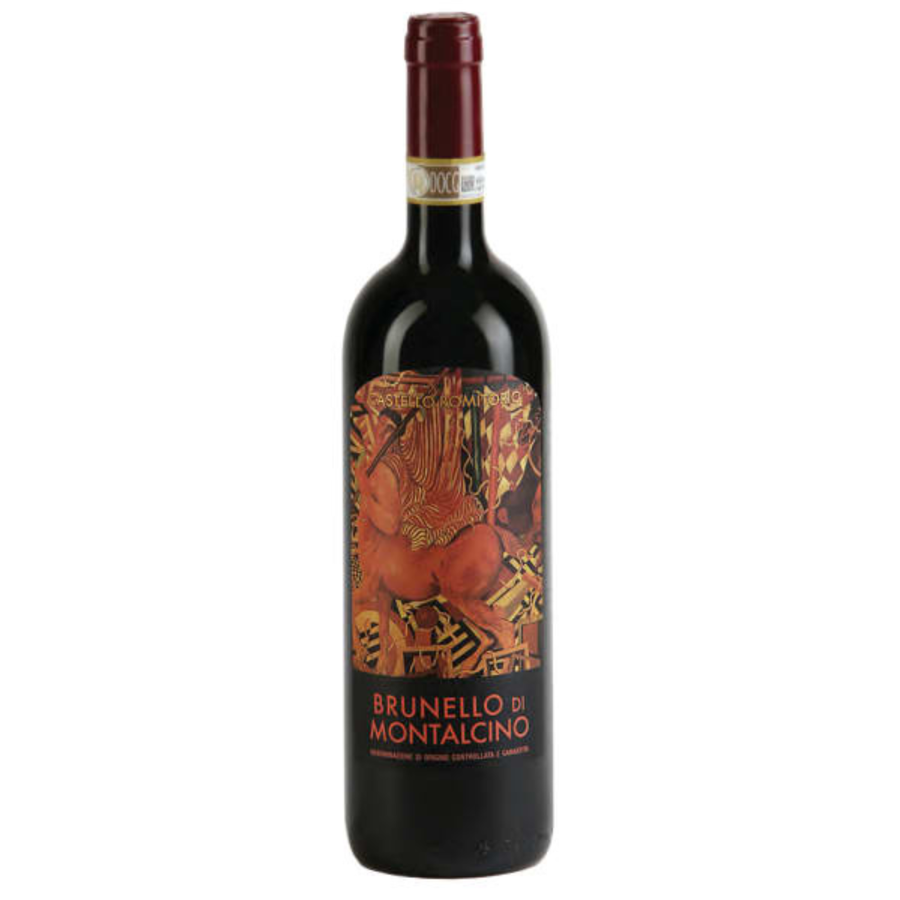


 Half Case (6)




What Our Customers Say